Life has a funny way of deciding timing for us, doesn’t it?
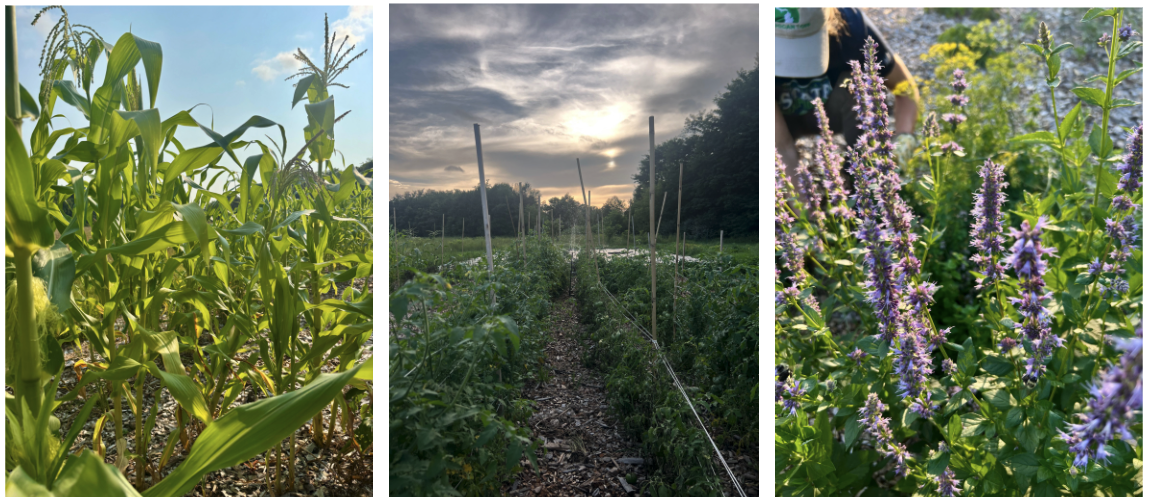
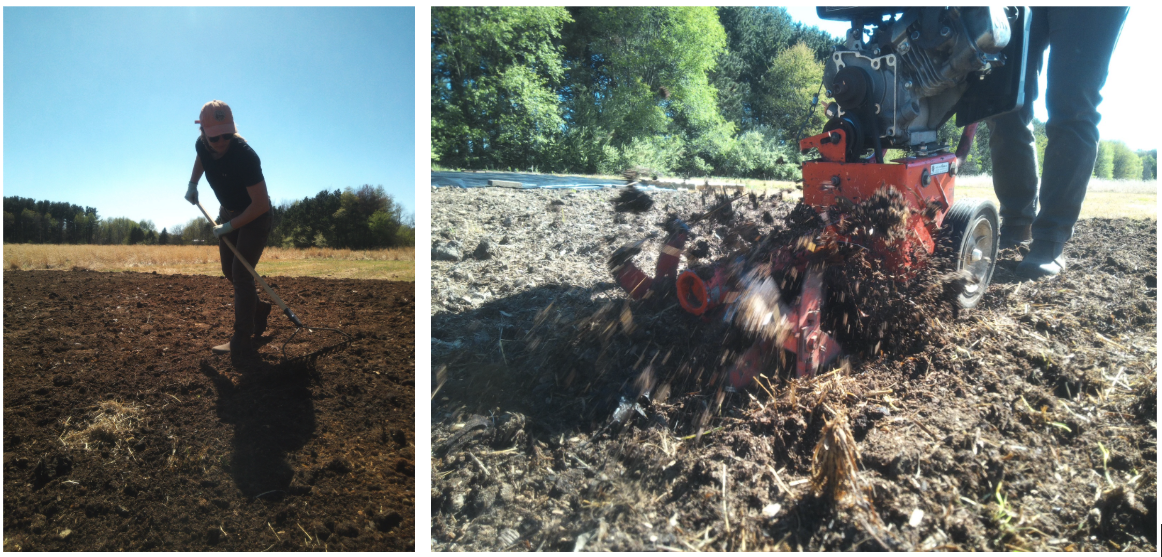
This spring, despite already having plenty on my plate, I had the opportunity to join a collaborative effort to start a ¼-acre market garden. I had always wanted to do something like this one day, but it wasn’t exactly the timeline I had imagined for myself. But how could I resist the opportunity to try?
I’ve always loved gardening and elements of homesteading. I was that neighbor in an apartment building with a balcony overflowing with vegetables, including varieties (shout out to the purple potatoes) you might not expect to thrive in such conditions. I’ve always loved shopping at local markets, making food from scratch, creating knits that keep me warm in the winter, and so much more.
There is something about these activities that feels like an expression of love and care. They take time. You plant a seed, steward it, hope, and wait. You make something with your hands and slowly watch it take shape. You invest in something without an immediate return. What could be more of a gift to yourself or someone else than your time, or something that carries the evidence of it?
Now, as October is just around the corner, I’m finding myself thinking about the strange dualities of this season.
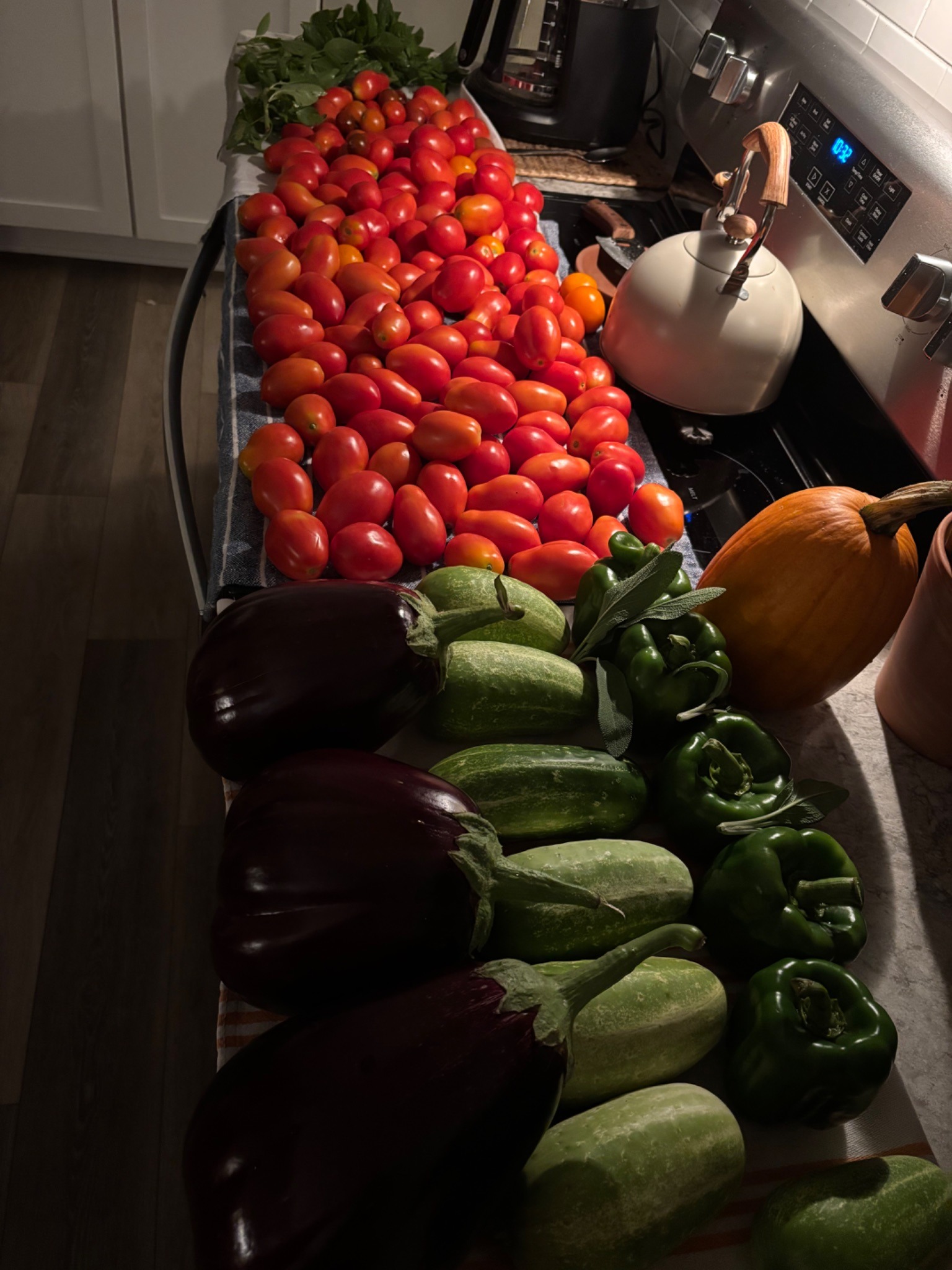
On one hand, I’ve been surrounded by abundance on the farm. There has been what seems to be an endless supply of vegetables to harvest, sell, gift, cook, and preserve. After months of laboring in all imaginable weather conditions, the results of that work are suddenly tangible.
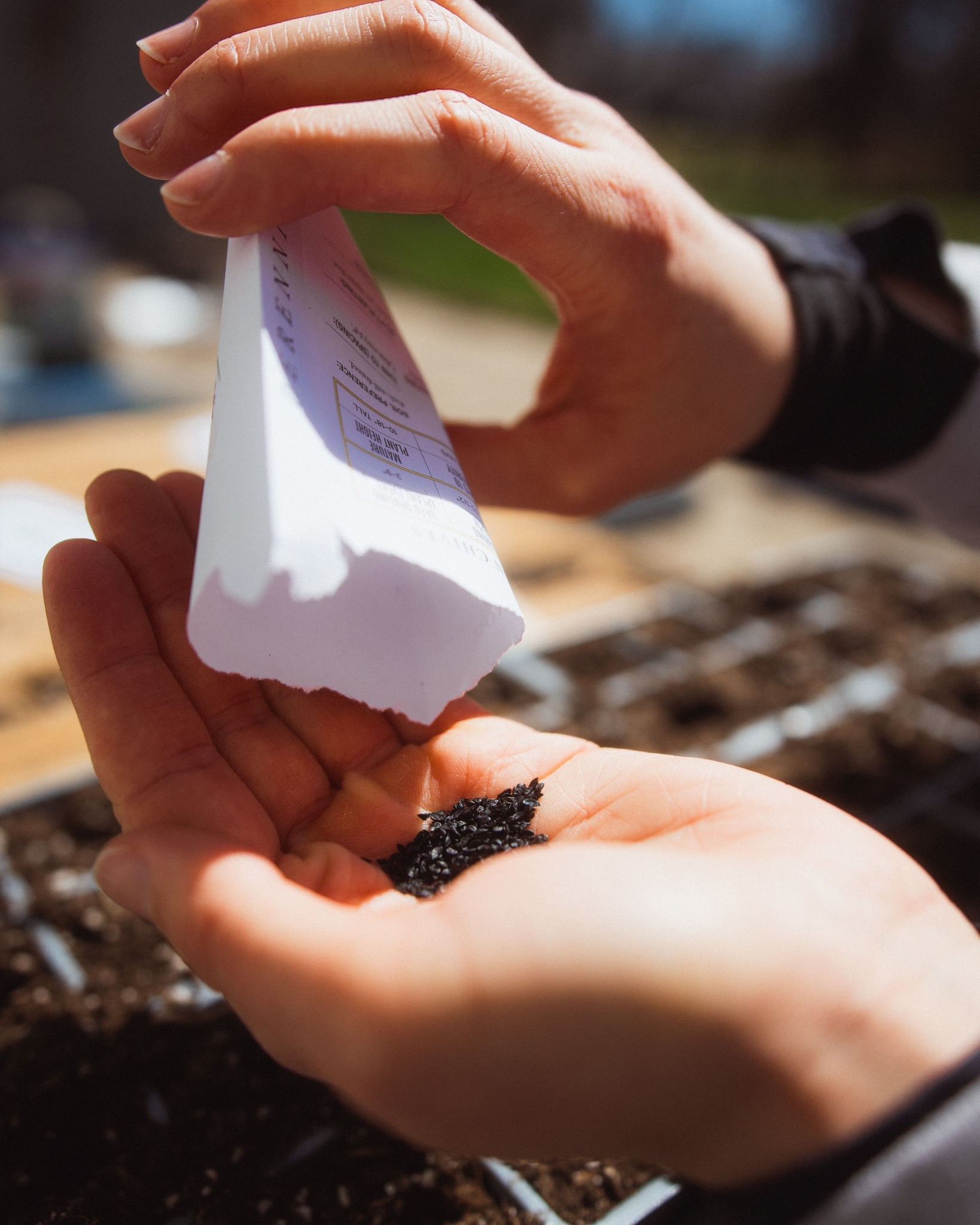
At the same time, the growing season is already beginning to turn. The pace of the work will change, and before I know it, the fields will be cleared. Tools will be repaired. Equipment will be winterized. Plans for next year will begin to take shape. Seeds will be selected and ordered. Eventually, there will be more time to reflect on what worked and what didn’t, and perhaps simply to rest.
The work won’t disappear; it will just change.
Picking what feels to be my body weight in cherry tomatoes has given me time to think about that distinction beyond the farm, too.
Social innovation has its own seasons as well. There are periods when the work is abundant: projects arrive, teams form, research gets underway, workshops fill the calendar, and ideas move quickly. And then there are quieter periods, perhaps like the current moment, when the pipeline slows. Whether this is simply part of the natural rhythm of the work, a reflection of broader economic conditions, or downstream of tighter funding for nonprofit organizations, a quieter season can be an uncomfortable place to be as a consultancy. When there is less work on the horizon, it can be tempting to assume that something has gone wrong.
But the farm has given me a different way to think about it.
No one expects a field to produce at the same pace all year. The work changes with the season. Some of it prepares for what comes next; some of it is maintenance; some of it is rest. All of it, in its own way, makes the next season possible.
Perhaps our work in social innovation is not so different.
There are things that are difficult to make space for when the calendar is full, such as, taking stock of what we’ve learned, checking in with our teams about how the culture feels and is evolving, following a question simply because it interests us, tending relationships without an immediate agenda, developing an idea that isn’t ready yet, or reconsidering what we want to grow in the first place.
This year, the farm has made me much more aware of how little control we have over timing. We can decide what to sow and how to steward it, but we cannot decide when something will be ready to harvest, or what the season will bring. And perhaps there is a similar temptation in our professional lives to try to force a season to become something it isn’t. We may push harder when the conditions aren't quite right, or to assume that a period of quiet needs to be immediately filled.
While not every season will be one of visible growth, that doesn’t make the work of those seasons any less valuable.
And perhaps there is something worth appreciating in that give and take: the reminder that neither the harvest nor the hibernation will last forever. When we are in one, we can try (our best) not to idealize the other.