
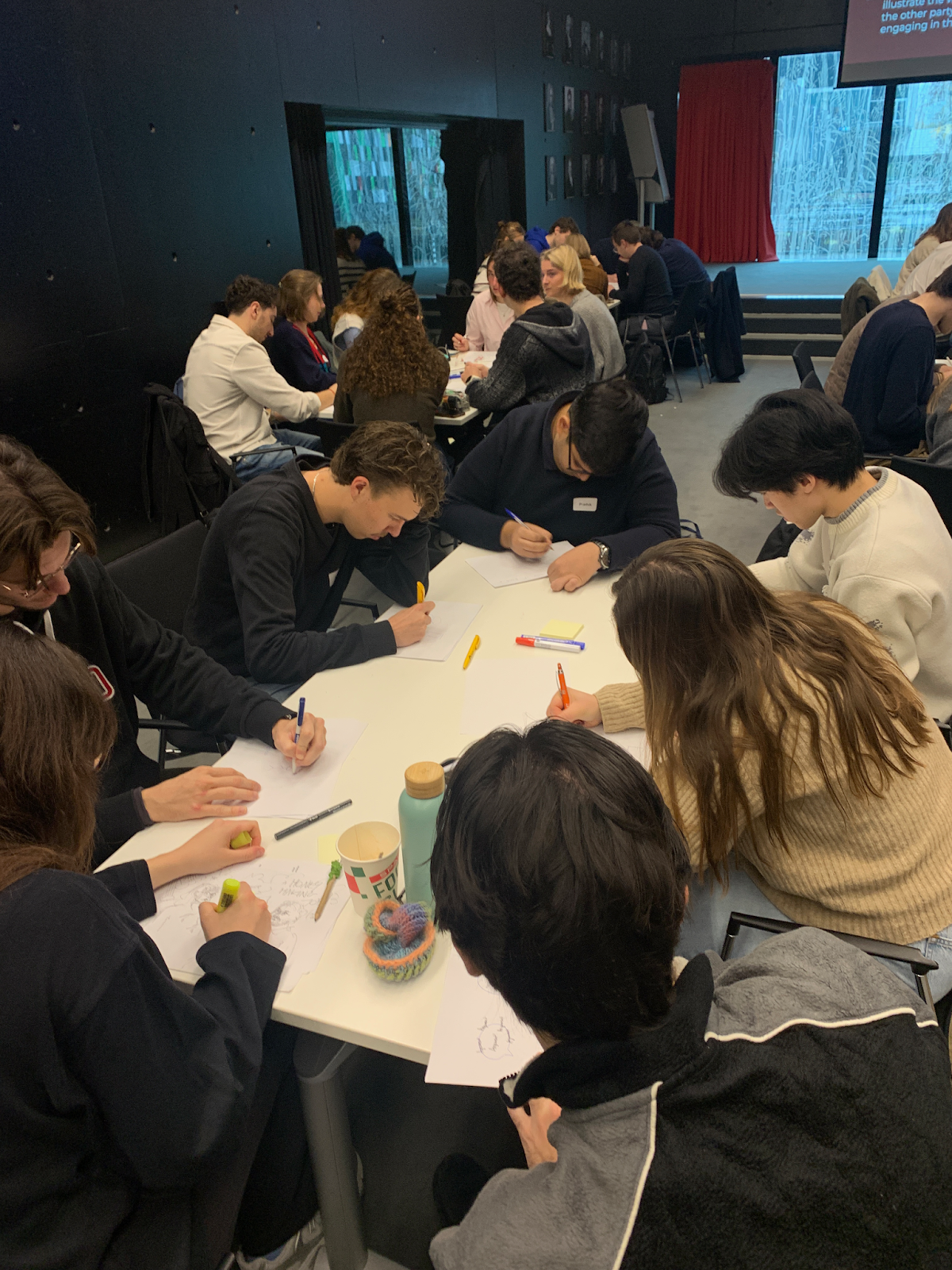
“Please take a white sheet of paper from the middle of your table.”
Eyes meet each other and then look at me.
“For the next 5 minutes, I would like you to draw a picture of an interpersonal conflict that you would like to resolve.”
Students scan the room as if searching for clarity. I repeat the instructions to assure them that they have heard correctly. The room grows quiet as students tentatively complete the exercise. The difficulty of the activity can be felt as students struggle to bring their conflict to life through colors and symbols.
A few minutes later, I broke the silence with a single question:
“How many of you found this activity challenging?”
Most of the students raised their hands.
When asked to elaborate, many of them shared:
their emotions were too layered and complex to give form to
they didn’t know where to begin
they didn’t feel prepared to engage
I allowed their responses to hang in the air for a while before responding:
“If I didn’t know that we were talking about a drawing, I could easily think we were talking about the nature of conflict itself.”
They nodded their heads in agreement.
Conflict is challenging to engage because:
sometimes, our emotions create barriers to expression
sometimes, it’s hard to pinpoint when or how the conflict started, and
sometimes, it catches us by surprise
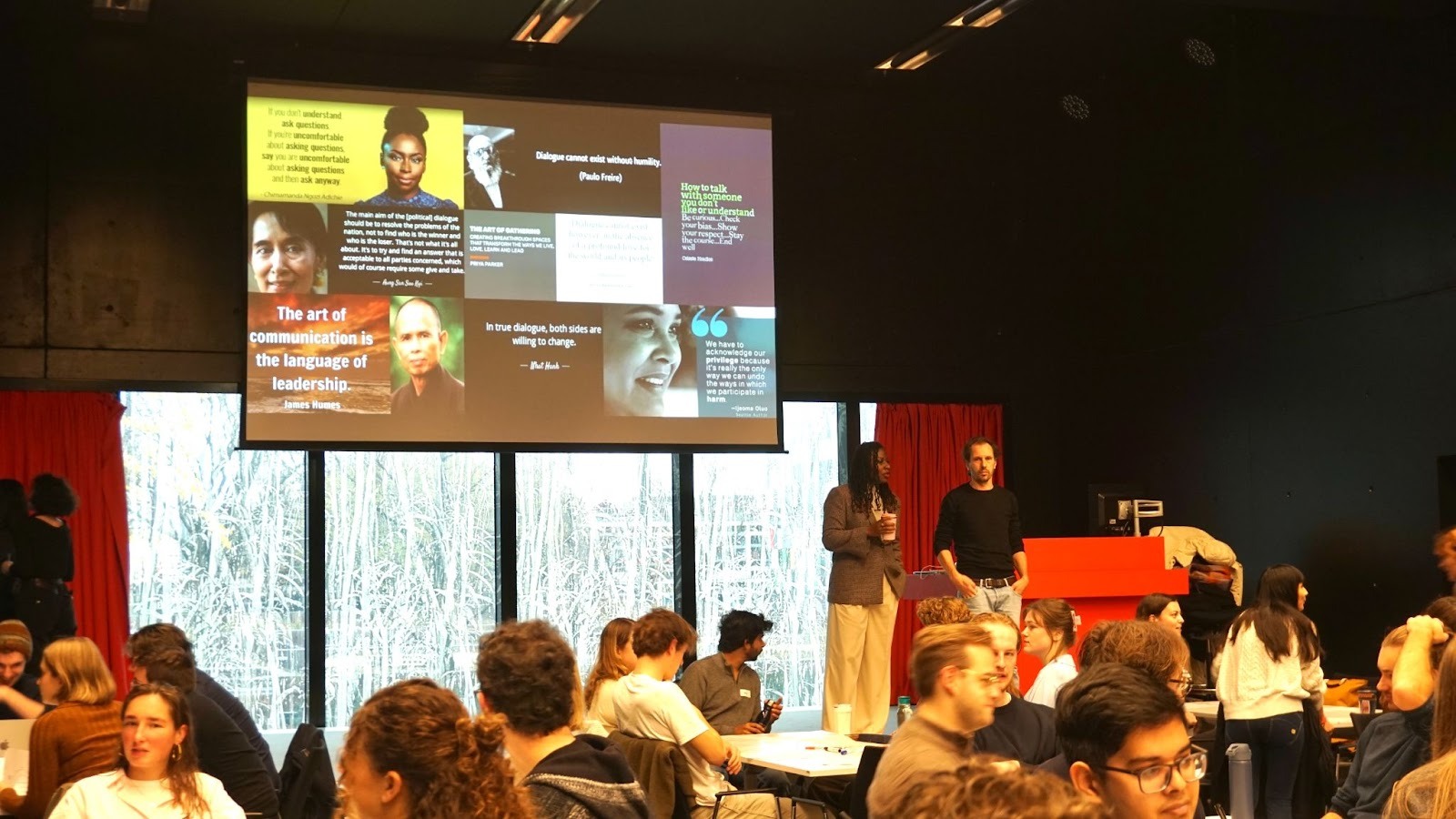
On Saturday, November 15, I was grateful for the opportunity to deliver a workshop on conflict resolution for 80 domestic and international graduate participants in the Honours Leadership Programme at Utrecht University. I was buoyed by the support of our two workshop assistants, Jessica and Elysia, who ensured the seamless flow of activities throughout the day.
After introducing the workshop agenda, I openly confessed that even after years of navigating difficult conversations in and outside the workplace, I still find conflict uncomfortable. Could this disclosure have undermined the students’ belief in my ability to facilitate a discussion on this topic? Possibly. But this was a dysfunctional belief that I intended to illuminate at the outset of our process.
Many people avoid conflict because it is uncomfortable. Many people live in a state of artificial harmony because it’s easier than confronting the issue directly. I wanted the students to know that discomfort is a natural part of the process and they can engage in conflict constructively even when its presence is palpable.
With that foundation, we continued our conversation with a focus on the intersection between conflict and identity. David Brooks writes in his book, How to Know a Person:
“Our encounters are shaped by our historical inheritances–the legacies of slavery, elitism, sexism, prejudice, bigotry, and economic social domination. You can’t get to know another person while pretending not to see ideology, class, race, faith, identity, or any of the other fraught and social categories.”
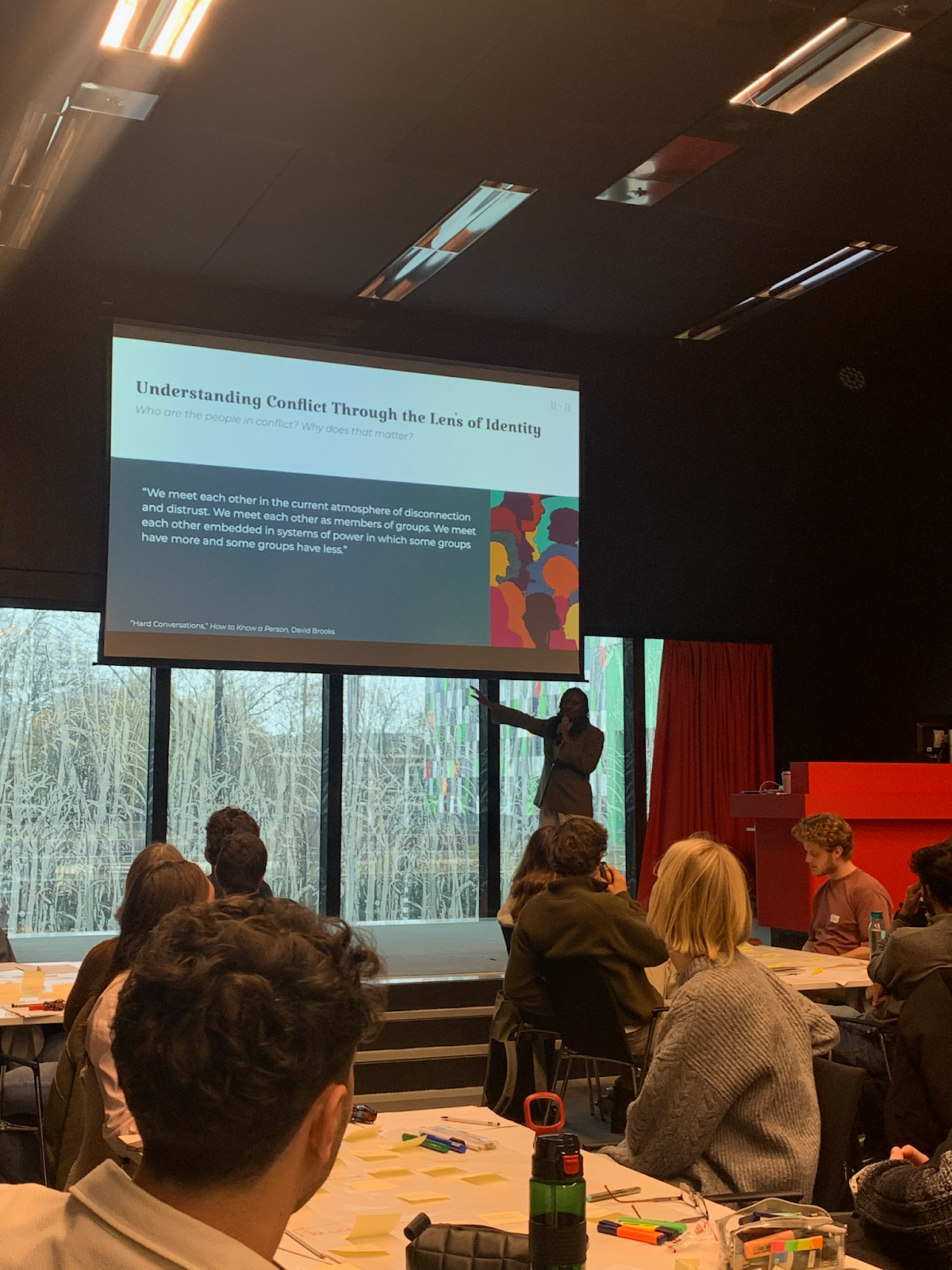
In this chapter, “Hard Conversations,” he discusses how our lived experiences inform not only our viewpoints but also the disposition in which we approach difficult conversations across select topics. After a collective reflection on the quote, some participants validated Brook’s premise with examples from their own lives. One student shared that gender plays a role in how she engages in conflict. When having intense conversations with her male counterparts, she typically employs a conflict avoidant approach due to past negative experiences where she left those interactions feeling dismissed and unheard.
Her comment reminded me of similar stories shared by my former female university students in the STEM field who felt they had to first justify their presence in male-dominated spaces before they could offer an opinion worth consideration. Brooks describes this tension as an “encounter between visibility and invisibility.”
This animated dialogue (which sometimes felt like a debate) provided fertile ground for further self-exploration. Upon the students’ completion of the Thomas-Kilmann’s Conflict Style self-assessment, I unpacked the main characteristics of the 5 modes of conflict: competing, collaborating, compromising, avoiding, and accommodating. Some students were surprised by their assessment results while others felt the assessment affirmed and expounded on their general approach to conflict. To deepen students’ understanding of each mode, I invited a few brave students to role play a prepared conflict scenario followed by a debrief.
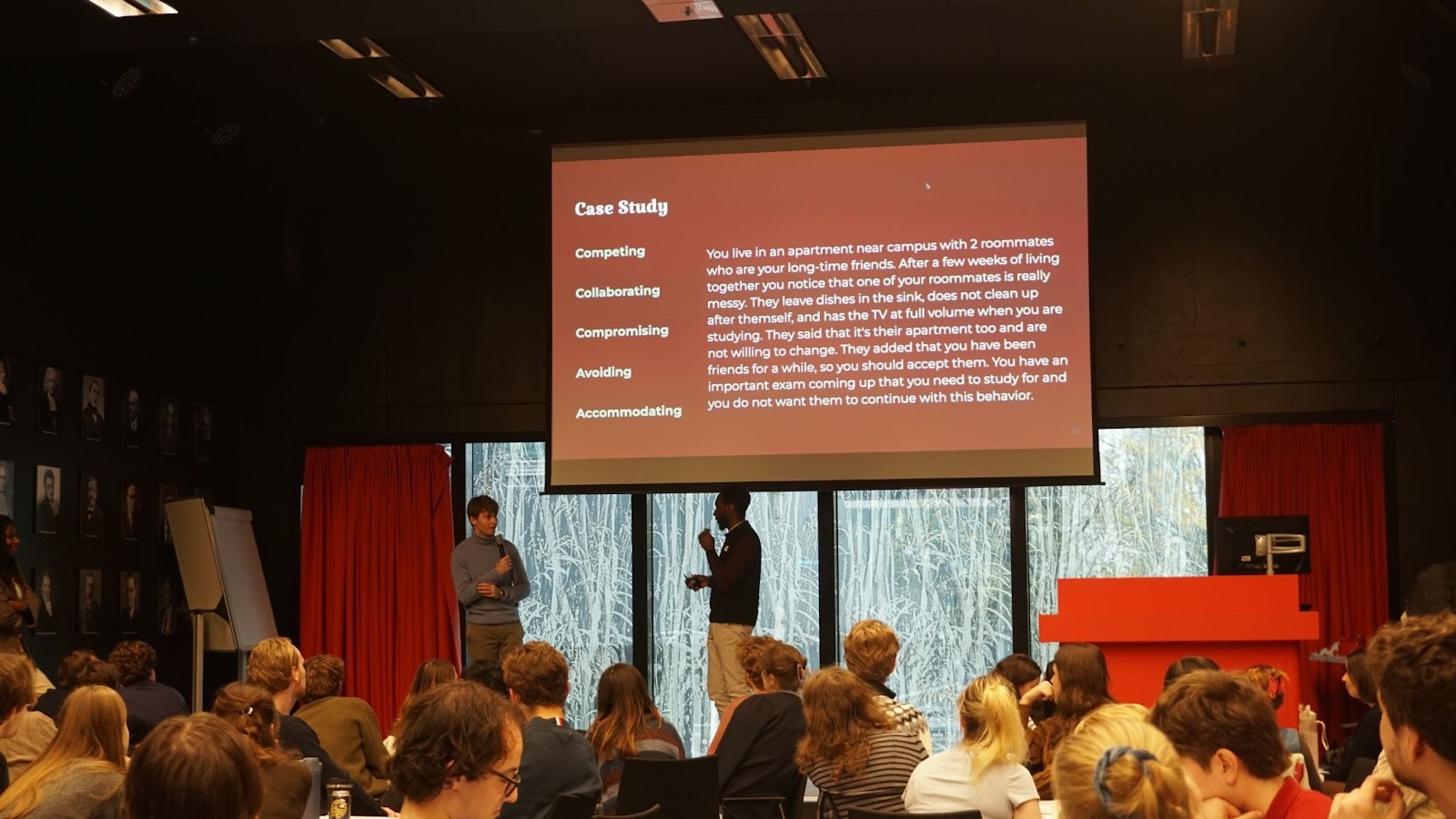
The assessment uncovered an interesting layer in our conversation: context matters. We agreed that our conflict style can shift depending on whether we’re engaging with a family member, work colleague, or romantic partner. Having this awareness is critical along with the flexibility to leverage other conflict modes more conducive to a productive outcome with our conversation partner.
As we rounded out the workshop, I provided an overview of actionable strategies students can use to de-escalate conflict and further the conversation in a positive direction. Leaning into the R+R practice of learning by doing, we kicked off this session with a Powerful Questions exercise intended to build students’ capacity to actively listen—to listen so attentively that they can hear not only what is being said, but also what isn’t. Students were instructed as follows:
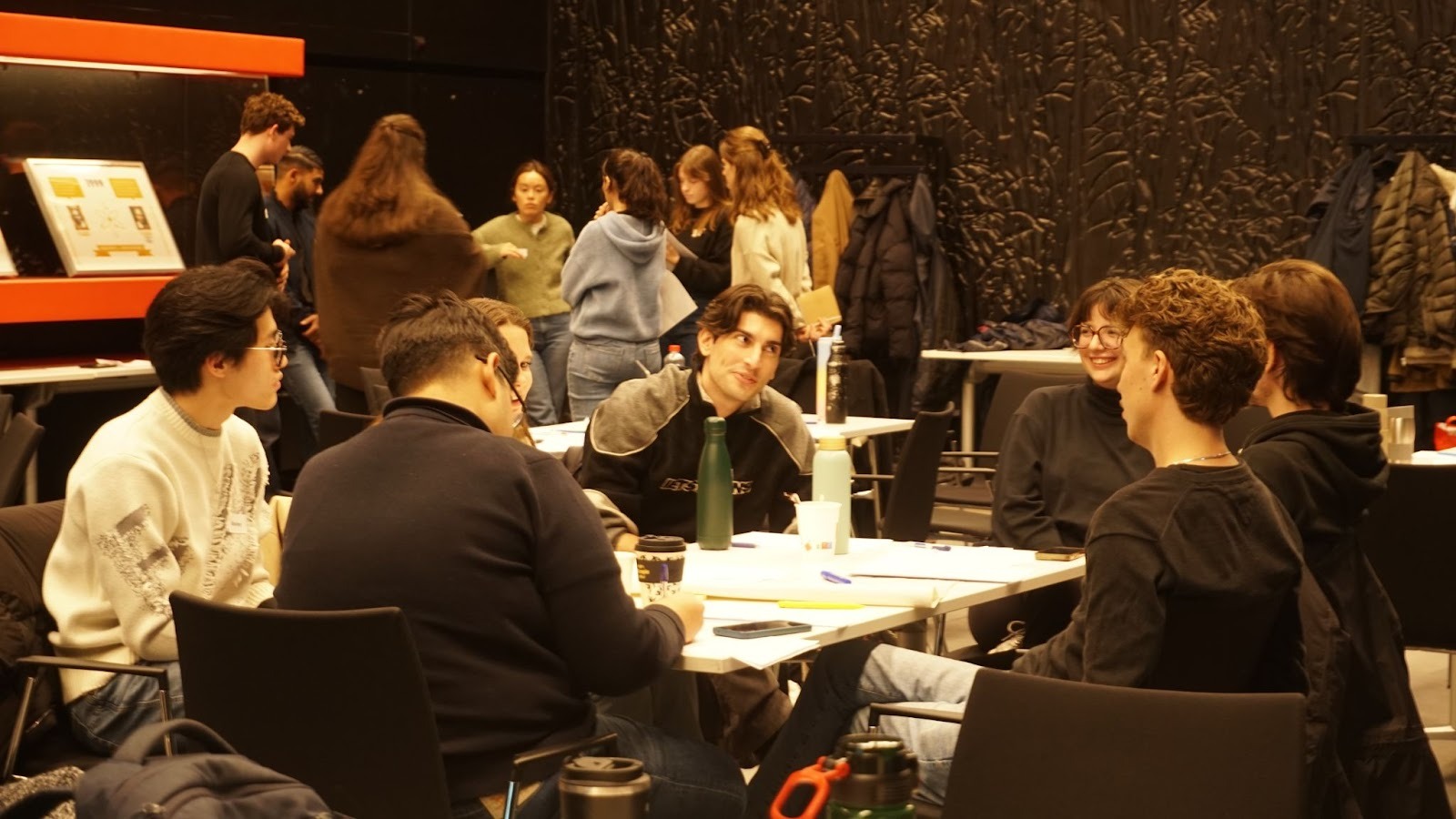
One of the best ways to demonstrate empathy and a willingness to listen is to ask open, thoughtful questions with a genuine spirit of curiosity. Entering conflict with this posture can help to reduce resistance, clarify misunderstandings, and suspend assumptions on both sides.
Before concluding the workshop, I asked students to reflect on their learnings throughout the day using a Conflict Analysis worksheet. I created this resource to help students work through their interpersonal conflicts by:
One participant noted: “This workshop met my expectations. While I knew things about how I usually operate, it helped with making the underlying ideas more tangible by naming them.”
Facilitation is not merely a job or skill; it is an act of service that reveals insights for the benefit of a collective. I was inspired by the perceptive comments and questions that energized our sessions, as well as by the participants’ willingness to be vulnerable and courageous in discussing their personal conflicts. For this kind of openness to emerge, I needed to model vulnerability myself and create an environment conducive to sincere, generative dialogue. As a process facilitator, a tremendous amount of preparation is required before a session; however, the real magic happens when you surrender, trust the process, and co-create in the moment with your participants.