
Several years ago, I participated in a professional development podcast club. I must have consumed innumerable hours of insights, inspirations, and critiques about broken systems; yet there is one line that I revisit often:
“We live in a culture of ‘not enough.’”
The social work researcher and thought leader, Brené Brown, went on to describe how a culture of scarcity fuels our belief that we don’t have enough time, we aren’t as productive as we should be, and, ultimately, we are not enough—we are inadequate.
She draws an inextricable link between inadequacy and authenticity. Because we feel that we do not measure up to the internal and external expectations placed upon us, we feel pressured to perform and assume a role “befitting” a given context. While many of us value authenticity (in principle), our fear of judgment and shame drives our behavior, stripping us of the freedom to truly exercise it.
In Brown’s book, The Gifts of Imperfection, she defines authenticity as more of a practice than a quality:
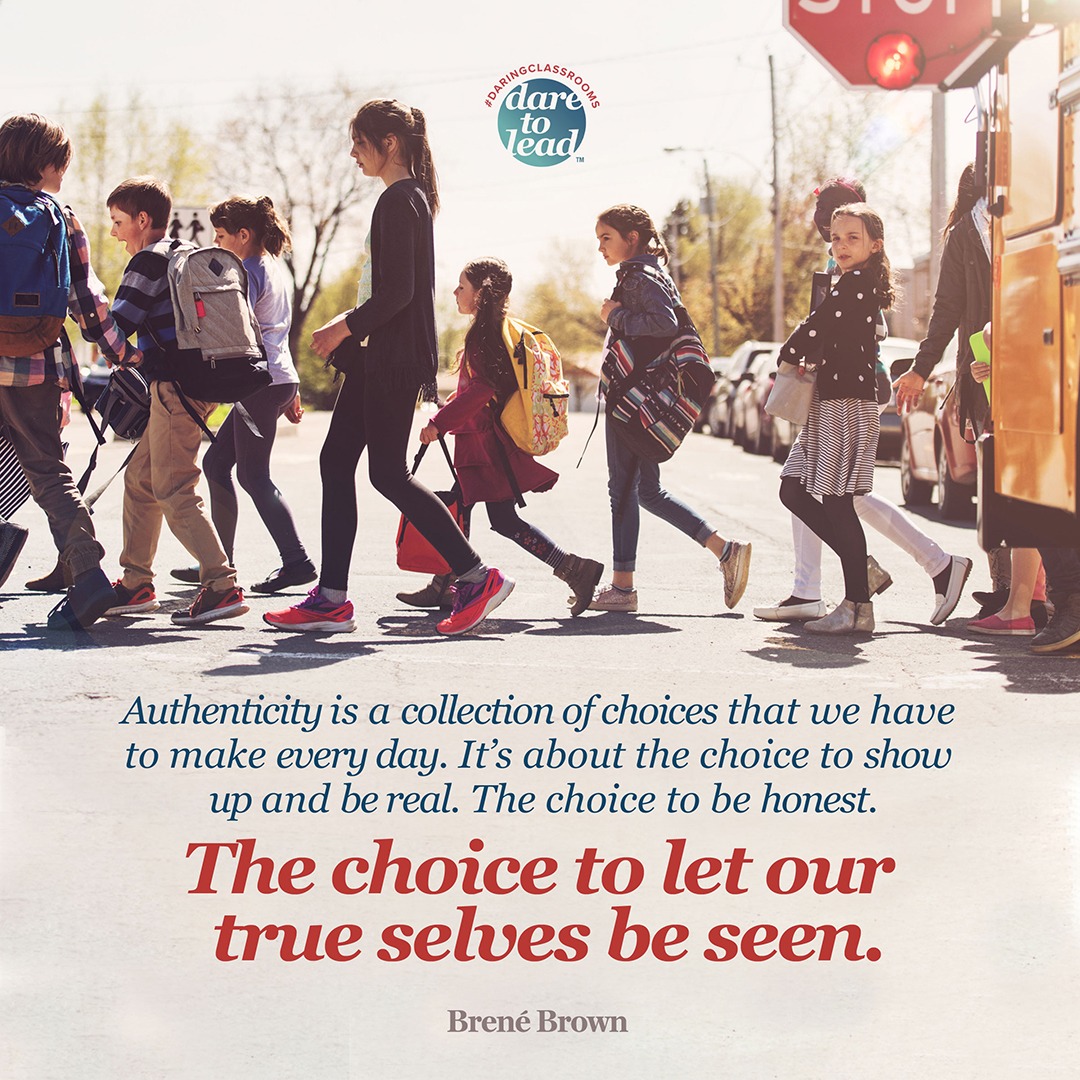
“Authenticity is the daily practice of letting go of who we think we’re supposed to be and embracing who we are.”
Our company, Roots + Rivers Collective, is established on four foundational values with authenticity intentionally listed first:
We embrace honesty, transparency, and integrity in all that we do. Grounded in our shared humanity, we work to build genuine relationships with our colleagues, partners, and clients that not only yield successful outcomes but also enable healthy collaborations.
We know our purpose, take pride in our services, and understand the cost of misrepresenting ourselves to our partners and clients. With that in mind, I was curious to hear what other professionals had to say about this topic, so I decided to explore this discussion beyond our company walls.

Cafés in Amsterdam are a prime location for many professionals to work while enjoying their beverage (and cardamom bun) of choice. Over the course of a week, I engaged six professionals across two cafes respectively located in Center City and Amsterdam Zuid. I chose these locations because of the diversity of professionals I anticipated encountering. The café in Center City is affiliated with a hotel that attracts creatives, entrepreneurs, students, and tourists, while Amsterdam Zuid is a hub for business, finance, and technology experts.
Even though I’m naturally extroverted, approaching strangers in a busy café requires an extra dose of courage (and caffeine). To my pleasant surprise, each person I encountered was open to sharing their thoughts and experiences about authenticity. Leonie, for example, had just wrapped up her virtual Chinese lesson when I leaned forward and said, “You’re learning Chinese,” lifting my tone at the end. She smiled and enthusiastically replied, “Yes!” That one hybrid statement-question led to an energetic discussion on our shared experiences in East Asia, which eventually opened the door to a deeper conversation on authenticity. As Brené Brown famously said, “We’re wired for story,” and this café experiment is a testament to that.
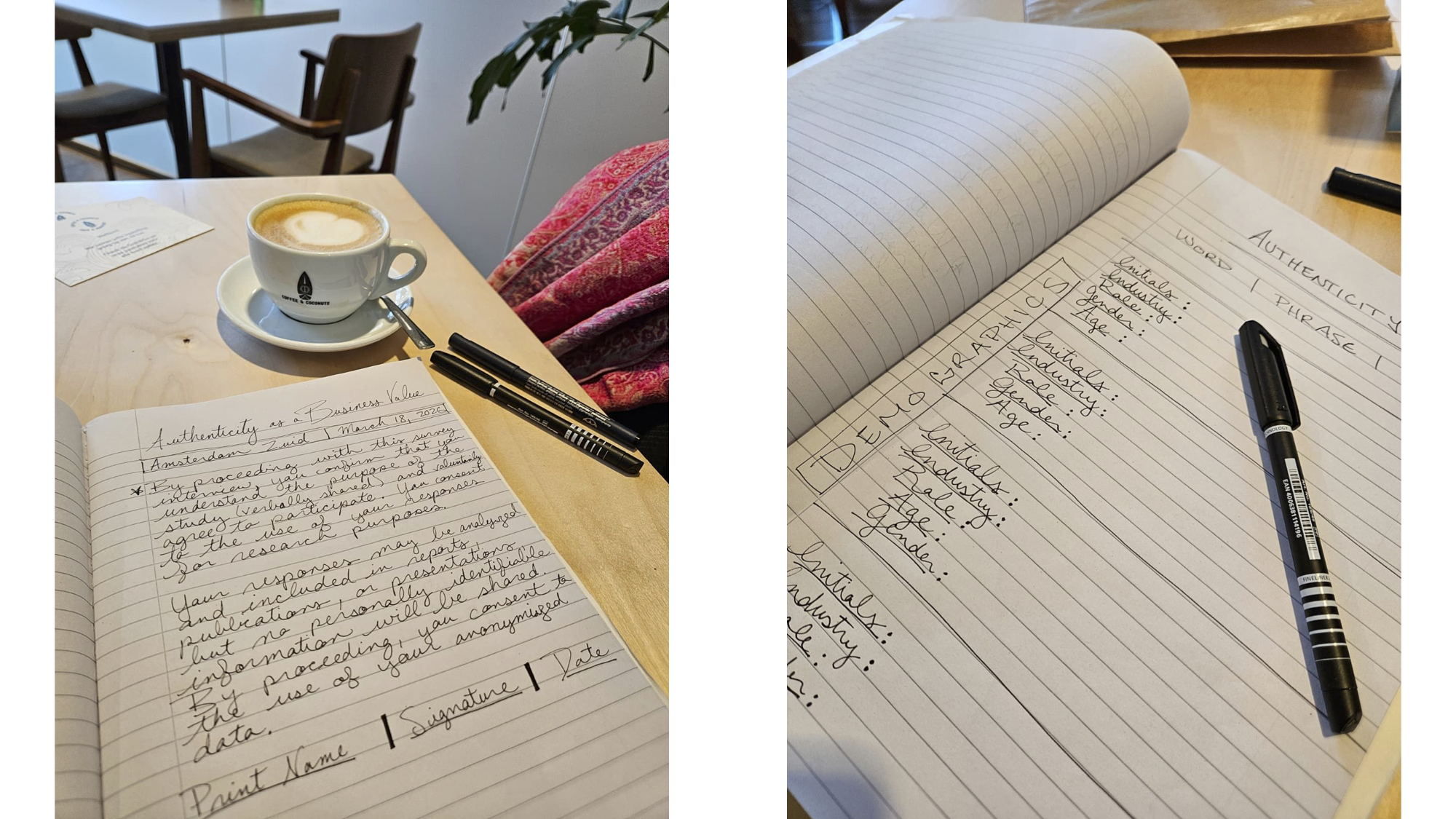
Each person was asked the same series of questions:
Consistent with Brown’s definition, all six participants converged on the central idea that authenticity means being true to oneself. Some describe it as a process whereas others characterize authenticity as a fixed state. Samir explicitly calls authenticity a “path” that is not easy to navigate and involves shifting identities. Similarly, Amélie and Dawn frame authenticity as a lifelong journey. Amélie sees it as a process of losing and rediscovering oneself, and Dawn conveys an ongoing series of questioning and realigning based on core values. Conversely, Victor treats authenticity as an arrival—a graduation from societal constraints stating that authenticity is:
“The ability of being yourself regardless of what society wants you to be and the boxes that have been pre-identified by a previous generation.”
When exploring how authenticity relates to business, transparency and truthfulness were two core themes that emerged across participants. Several participants emphasized the importance of honesty in both actions and communication. Leonie shared personal experiences from her work where she openly admitted to her colleagues that something was wrong even when it was inconvenient. Meike underlined that selling unnecessary products to clients is not only futile but can also result in internal and external reputational harm.
Additionally, authenticity in business was expressed as alignment to values, identity, and purpose. Both Samir and Victor affirm business as a reflection of the leader’s identity and purpose. Authenticity serves as a vehicle for connection not only to the product or service, but also to its creator. In this same vein, Amélie shared that she remains grounded by knowing her “why,” which allows her to sincerely connect with her clients and build sustained trust and memorability. Dawn disclosed her journey with neurodiversity and her increasing need to choose work that matches her values, energy, and the way her brain functions.
Being able to detect whether authenticity is real or performative became a key focus during this part of the interview. Samir, in particular, provided a pointed critique of fake authenticity:
“So, there are some of them [companies] that are really authentic and they really try to push for authenticity and some of them that use it as a tool to just advance their own agenda.”
In his final analysis, he offers the clothing company, Daily Paper, as an example of real authenticity. He appreciates how the brand extends beyond clothing and engages diverse audiences in a dialogue around African roots, culture, and art. He shares:
“You can connect with it because of your own life experience….they understand their platform and use it for good.”
Where Victor and Amélie illustrate authenticity as personal expression, Leonie and Dawn, by contrast, paint a collective and shared experience. Leonie notes:
“So, it's not only about a person being authentic. I think that's where it starts. Especially when you're the one presenting or creating the dialogue. But then it's something that we carry all together. So, I think this is a collective thing.”
Providing an example of a company that prioritizes serving and accommodating employees who are neurodivergent, Dawn contributes:
“You can be in a meeting and because everybody has some experience with neurodiversity personally, you could say to your colleagues, you know what, I've got to tap out, I'm feeling overwhelmed, and there's no judgement.”
By way of this example, Dawn broadens the conversation of authenticity to organizational leadership and wellbeing practices.
The majority of participants view AI as a tool that can assist humans but cautioned against known harms. They drew a spectrum that ranged from opportunity to risk.
Amélie warned:
“AI is a tool…it helps you. If you use it as a helper, then you're securing yourself. If you take it as an enemy, then it takes you over.”
Victor articulated similar views:
“Authenticity is a strong human character that AI cannot detect nor produce… people are letting AI replace their thinking… it can be a very supportive tool, but it can also be a very scary thing.”
All participants stressed that authenticity is inherently human and cannot be fully replicated by AI. They underscored that authenticity requires human agency and misrepresentations of authenticity can be detected. Some participants note that AI has the ability to enhance authenticity by providing tools that allow you to be more creative and generate more ideas. It enables efficiency, but it can never produce originality.
Meike rhetorically posed the question:
“Can AI solve simple repetitive tasks? Yes… but AI can’t reason.”
Akin to the ongoing debates traveling around our academic and social circles, participants believe that AI can be a tool or threat depending on how it is harnessed by the individual.
Below is a montage created from participant responses to the question: How would you conceptualize authenticity in a word, phrase, or symbol?
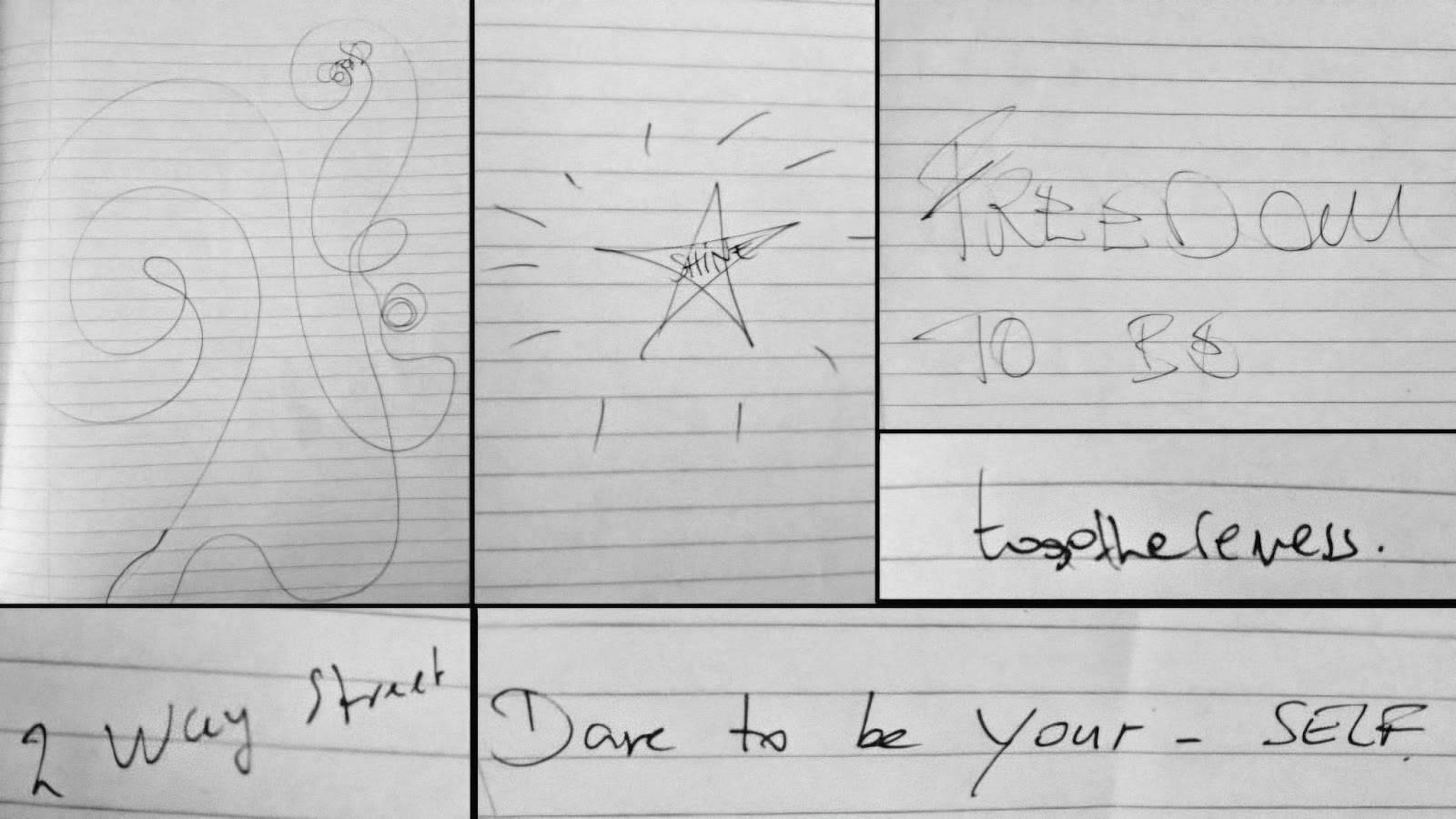
This experiment has shown me that I am not the only one who grapples with defining authenticity. My team member, Mikaela, captured it best: “It’s one of those things that you just know when you see it.” Participants echoed similar sentiments, describing authenticity as something to be felt or intuitively recognized.
While the search for the most comprehensive definition of authenticity persists, its value is undeniable. All participants expressed a desire to show up authentically in both their personal and professional lives, while acknowledging the challenge of staying true to themselves amid societal expectations. “Choosing authenticity and worthiness is an absolute act of resistance,” as Brené Brown reminds us.
Practicing authenticity is a deeply human experience complicated by the constant negotiation between self, others, and environment. As such, there are instances where being true to yourself means being in direct conflict with contextual norms and values. Navigating these realities requires profound courage and vulnerability. The risks cannot be refuted, but neither can the benefits highlighted throughout this article: deeper connection, enduring resonance, and creative confidence. Regardless of your industry, you might discover that daring to be yourself is the unexpected business insight that can transform a single moment into lasting momentum.